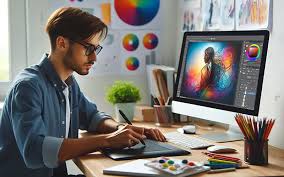
IN 2025 Graphic designing is a powerful form of visual communication that blends creativity, technology, and strategy to deliver messages that captivate an audience. It shapes the way people perceive information and plays a critical role in advertising, branding, digital media, entertainment, and countless other fields. Graphic design does not simply decorate or beautify content; it acts as a storytelling tool that influences emotions, decisions, and actions. Designers work actively to create experiences that are visually striking, purposeful, and user-friendly. In today’s fast-paced digital era, graphic design has become one of the most demanded skills because it combines artistic sensibility with problem-solving techniques.
The Essence of Graphic Designing
Graphic designing revolves around the art of creating visual elements that solve problems and convey specific messages. A designer carefully arranges typography, colors, shapes, images, and layouts to bring an idea to life. Instead of relying on words alone, graphic design speaks visually, ensuring that the message connects instantly with its intended audience.
Every design project begins with a purpose. Designers work actively to understand the client’s needs, target audience, and communication goals. They do not create randomly; they analyze, brainstorm, and then craft visuals that stimulate engagement. For example, a company launching a new product wants its advertisement to attract attention immediately. Here, the designer creates a poster or social media graphic that highlights the product’s unique features, uses appealing colors, and places the call-to-action at an easy-to-notice position.
Key Elements in Graphic Designing
Graphic design uses fundamental visual elements as its building blocks. Designers actively manipulate these elements to produce meaning:
-
Typography: Designers use fonts not just to display text but to represent tone, style, and personality. A bold typeface conveys strength, while a handwritten font feels personal or artistic.
-
Color: Colors evoke emotions. Designers choose palettes that reflect brand personality and trigger psychological responses. For example, red often signals passion or urgency, while green suggests growth or sustainability.
-
Shapes and Lines: Geometric shapes feel stable and modern, while organic shapes bring softness and natural flow. Lines add direction, separate sections, or create emphasis.
-
Images and Illustrations: Pictures instantly tell stories. Designers actively blend photographs, icons, or hand-drawn illustrations to improve clarity and appeal.
-
Layout and Space: Arranging elements properly determines how smooth or chaotic a design feels. Designers actively use space to give balance, create focus, and improve readability.
Areas of Graphic Designing
Graphic designing is not limited to one medium or platform. It branches across numerous fields where visuals carry power. Some important areas include:
-
Brand Identity Design: Logos, business cards, and brand guidelines define how a company presents itself. Designers ensure the identity matches the company’s values and vision.
-
Advertising: Posters, brochures, flyers, and digital ads rely heavily on visuals that grab attention quickly. Designers actively highlight selling points to make campaigns successful.
-
UI/UX Design: In today’s world, websites and apps must be visually engaging and easy to navigate. Graphic designers collaborate with developers to ensure digital interfaces look good and enhance user experiences.
-
Print Design: Even in a digital age, print remains vital. Book covers, magazines, product packaging, and event invitations are still designed with elegance and strategy.
-
Motion Graphics: Animated visuals in videos, films, or online ads use motion design to create strong impact. Designers add life to static images by combining movement, sound, and visual elements.
-
Social Media Design: Platforms like Instagram, YouTube, and Twitter thrive on quick, catchy visuals. Designers craft eye-catching creatives that spread messages at lightning speed.
Tools and Technology in Graphic Designing
Modern graphic design thrives on technology. Designers actively use advanced software to execute their visions. Programs like Adobe Photoshop, Illustrator, InDesign, CorelDRAW, Figma, and Canva dominate the industry. These tools give them endless flexibility to manipulate images, create vector graphics, arrange layouts, design prototypes, and animate visuals.
Technology also allows designers to collaborate globally. Cloud-based platforms let professionals work on shared projects in real-time, creating efficiency and quick workflows. In addition, artificial intelligence and augmented reality are expanding opportunities for designers by introducing new possibilities such as automated mockups, virtual experiences, and interactive media.
Role of Creativity and Strategy
Successful graphic designing depends on creativity, but it does not exist without strategy. A designer’s task goes beyond producing something beautiful—they must create something functional. For example, if a billboard looks attractive but fails to deliver a clear message, the design is unsuccessful. Active designers balance imagination with objectives, ensuring the design delivers results.
They conduct market research, analyze competitors, and consider user psychology. Creativity gives uniqueness, and strategy ensures direction. By blending both, graphic designers make campaigns persuasive and memorable.
Impact of Graphic Designing in Society
Graphic designing shapes culture and influences social trends. Advertisements on television, memes on social media, book illustrations, user interfaces, political posters—all rely on design to spread messages. Designers actively shape narratives and push awareness around social issues, consumer choices, and entertainment preferences.
In business, graphic design drives marketing success. A well-designed logo creates brand recognition, while a visually engaging website keeps customers interested. Companies invest heavily in design because audiences often trust and connect more with visually professional brands.
Design also plays a motivational role in education and social causes, turning complex data into infographics, campaigns into movements, and abstract ideas into relatable visuals. By converting dull information into attractive graphics, designers make knowledge easier to absorb.
Future of Graphic Designing
Graphic designing continues to evolve rapidly. With the rise of artificial intelligence, machine learning, and 3D design, the scope of opportunities is expanding. Designers will actively participate in virtual reality environments, metaverse branding, interactive holograms, and dynamic motion content.
Even with advanced tools, human creativity will always remain the heart of design. Machines can generate outcomes, but imagination, empathy, and originality belong to human designers. The demand for skilled graphic designers will grow because businesses need unique, human-driven visuals that connect emotionally with audiences.
Conclusion
Graphic designing represents more than artistic decoration—it is a profession that merges creativity with communication. Designers work actively to solve visual problems, transmit messages, and build strong brand identities. From digital screens to physical print, from memes to corporate branding, graphic design influences daily life everywhere. It balances elements like typography, color, space, and imagery with technology and strategy, making communication more effective.
As businesses, organizations, educators, and entertainers continue to seek impactful ways of reaching people, graphic designing will stand as an indispensable tool. It will continue to empower voices, shape perceptions, and drive innovation. Graphic design will always be an art of both vision and action.
Would you like me to make this 1000-word essay more formal and academic in tone, or keep it engaging and simple for a wider audience?